How we respond to 999
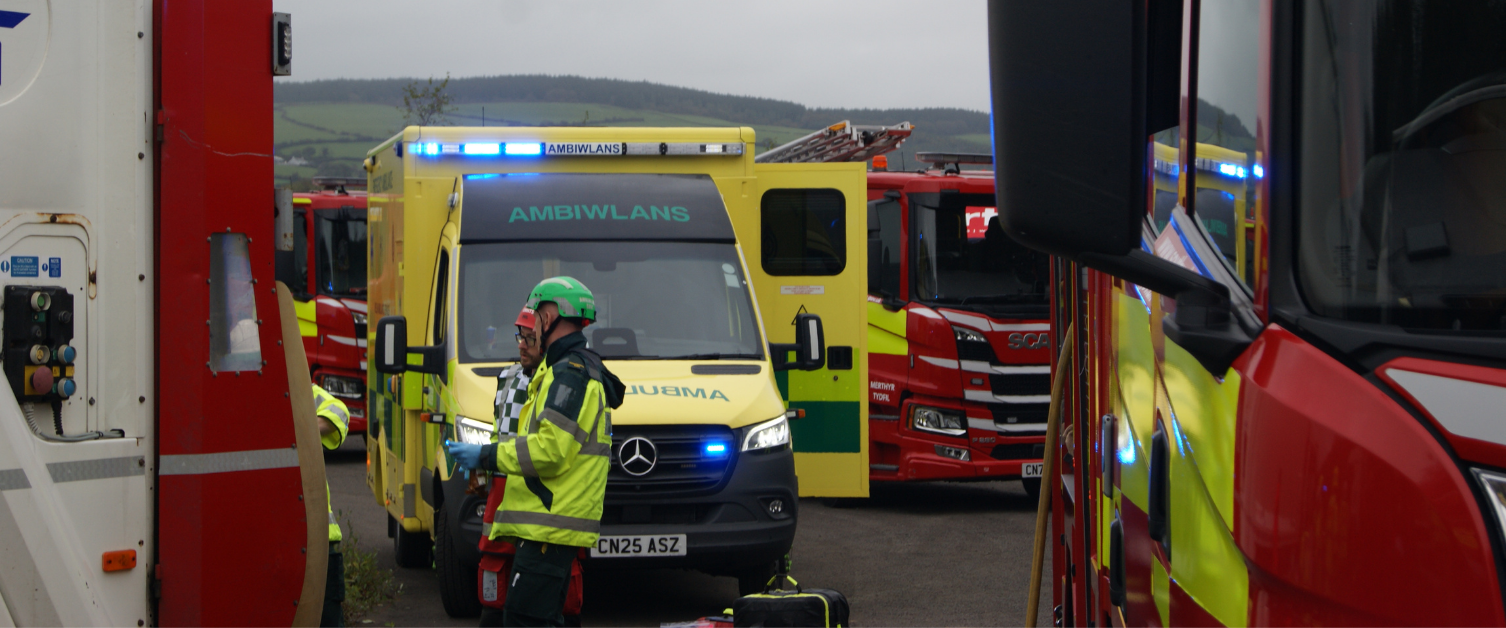
There are a number of responses we provide:
Remote Integrated Care Service
Clinicians (a paramedic or nurse), working within our control room might call you back to undertake a further clinical telephone assessment.
This allows patients to be assessed over the telephone within the community in line with their specific healthcare needs. This can often mean that you will be provided with self-care advice at home or you will be referred to a more appropriate part of NHS Wales who can address your needs more appropriately, for example a general practitioner.
Emergency Ambulance
An emergency ambulance crew normally comprises of a Health and Care Professions Council (HCPC) registered paramedic and an emergency medical technician (EMT) or an emergency ambulance practitioner (EAP).
Crews have to be highly skilled and able to undertake a comprehensive assessment and start appropriate treatment and management. Patients are then either transferred to hospital or a specialist unit without unnecessary delay or sometimes can be referred to another part of the health service for follow on care.
Hazardous Area Response Unit
HART is a specialist unit of trained ambulance staff equipped to provide clinical care in hazardous, high-risk or multi risk environments. They have various vehicles and have purpose-built equipment or each environment (chemical, biological, radiological, and confined space).
Solo Response Vehicle
A solo response vehicle is used by various staff for a number of reasons.
- Cymru High Acuity Response Unit Paramedic
Responds only to the most urgent calls, including cardiac arrests, road traffic collisions, major trauma and maternal emergencies.
- Advanced Paramedic Practitioner
An APP is a HCPC registered paramedic that has undertaken additional training at masters level to provide advanced care and treatment including the prescribing of some additional medicines.
- Senior Paramedic
Combines clinical expertise with clinical leadership responsibilities to ensure staff can deliver high‑quality patient care while supporting the development of frontline teams.
- Operational Manager
The OMs are the backbone of locality management team and clinical and quality teams to maintain continuity and drive improvements. It is vital that the OM ensures that any resource on duty has everything needed to undertake their role to the highest possible standard without delay. The OM is the daily point of contact for local escalation issues and liaison between other key stakeholders (local hospitals, Police, Fire etc).
Volunteer Community First Responder or Community Welfare Responder
Travelling in their own vehicles, volunteer CFRs provide essential lifesaving treatment and support in those crucial minutes before the ambulance crew arrives, while volunteer CWRs provide welfare and clinical observations on lower acuity patients within the community and provide more information to clinicians in our clinical control centres.